Key Stats
Data as of May 2026A Temecula homeowner Top of Temecula tracked through 2025 started his solar conversation in March, signed in October, and watched his installation slip into 2026 — losing the 30% federal credit by twelve days. He had assumed the credit was tied to his contract date. It wasn't. The IRS treats solar as "placed in service" only when the system is permitted, installed, and producing. His paperwork from October bought him nothing once the calendar flipped.
That story would be unusual on its own. It isn't unusual now, because three structural changes hit Temecula solar at once: the 30% credit ended December 31, 2025; California's NEM 3.0 cut export compensation by roughly three-quarters in April 2023 (the grandfather window for older systems just closed); and the largest local installer, Freedom Forever — headquartered four exits south of Old Town — filed Chapter 11 in April. Anyone making the solar decision in 2026 is making it under a completely different set of rules than the homeowner who installed in 2022.
The decision still makes sense for some Temecula households. It absolutely does not make sense for others. This guide walks the math, the regulatory landscape, and the local installer landscape with all three of those changes accounted for. No "click to claim your savings" buttons. No partner installers. Just the questions to ask before you sign anything.
The 30% Credit You Just Missed
The Residential Clean Energy Credit under IRC §25D was a 30% federal tax credit on the full installed cost of solar panels, batteries, labor, and wiring. It was structured to taper after 2032. It did not taper. Public Law 119-21, signed July 4, 2025, terminated the credit for residential systems placed in service after December 31, 2025.
The IRS interprets "placed in service" as the date the installation is complete and the system is operational — not the contract date, not the payment date, and not the permit date. A system installed January 3, 2026 receives no federal credit even if the homeowner signed in September 2025 and paid the deposit in October. There is no grace period and no partial credit for partially completed work.
What's left at the state and utility level: California offers no comparable state-level solar tax credit. Low-income programs (DAC-SASH, SOMAH) continue but apply only to qualifying income brackets. Battery storage may qualify for the federal Investment Tax Credit if installed as part of a new solar system — that piece survives §25D's expiration through Section 48E for commercial structures, but the residential carve-out is gone. The federal incentive layer most Temecula homeowners counted on for the past decade is over.
Your Math Just Changed: NEM 3.0 and the 75% Cut
California replaced NEM 2.0 with the Net Billing Tariff — informally called NEM 3.0 — on April 15, 2023. Systems energized before that date were grandfathered into NEM 2.0 export rates for 20 years from their original PTO (Permission to Operate) date. The final deadline for catching the grandfather window was April 15, 2026. That window is now closed.
Under NEM 2.0, exported power was credited at roughly the retail rate — about 30–35¢ per kWh in SCE territory. Under NEM 3.0, exported power is credited at an "Avoided Cost Calculator" rate that averages 4–5¢ per kWh. That's a reduction of roughly 75%. For solar-only systems sized to slightly overproduce, that cut moves the payback period from the 5–7 year range homeowners saw before 2023 to 9–14 years today.
The structural workaround is battery storage. With a battery, you store midday production for use during the 4–9 PM peak — when SCE charges as much as 58¢ per kWh on time-of-use plans. That moves payback back into the 7–8 year range and protects against future export-rate cuts. Battery attachment rates across California have already shifted from 11% in 2022 to over 50% by 2024, almost entirely because of NEM 3.0. If a 2026 quote arrives without a battery option presented, that's a sign the installer is selling against the actual current economics.
Your HOA Says No. They Don't Have That Authority.
California Civil Code §714 — the Solar Rights Act — prevents any covenant, restriction, or condition from prohibiting or unreasonably restricting solar installation on a single-family residence. "Unreasonable" is defined: an HOA restriction is unreasonable if it raises installation cost by more than $1,000 or reduces system efficiency by more than 10%.
The deemed-approval rule is the part most Temecula homeowners don't know. Once you submit a complete solar application to your HOA, the board has 45 days to respond in writing. If they don't respond within 45 days, your application is deemed approved by statute. No further board vote required. A homeowner who is told the application is "under review" past day 45 — without a written denial citing specific §714-compliant grounds — has already won.
If an HOA denies a solar application on aesthetic grounds without a specific finding tied to cost or efficiency, §714 entitles the homeowner to civil damages including attorney's fees and a $1,000 civil penalty per violation. Wolf Creek, Redhawk, Paseo Del Sol, Morgan Hill, and Crowne Hill are all managed by master associations with sub-HOA layers — that's where the most §714 disputes surface. The pattern is consistent: aesthetic objection, boilerplate denial, no specific finding. That denial is not enforceable.
Your Installer Just Filed Chapter 11. Now What?
Freedom Forever LLC — headquartered at 43445 Business Park Drive in Temecula, the second-largest residential solar installer in the U.S. as recently as 2025 — filed a voluntary Chapter 11 petition in the U.S. Bankruptcy Court for the District of Delaware on April 15, 2026 (case 26-10522). The filing came nine business days after the Texas Attorney General named the company in a Civil Investigative Demand targeting deceptive residential solar sales practices. The petition listed estimated assets of $100–$500 million against liabilities of $500 million to $1 billion, with 50,000 to 100,000 creditors.
If you have an active Freedom Forever contract, monitoring agreement, or workmanship warranty, here's what survives and what doesn't. Your panels and inverters keep producing power — the equipment is yours once the install was paid for, regardless of the installer's status. Manufacturer warranties on the hardware (panels, inverter, racking) are issued by the manufacturers (Q-Cells, SolarEdge, IronRidge, etc.) and survive the bankruptcy intact. Customer reviews aggregated on the Temecula BBB profile describe service-response times stretching from weeks to months even before the filing — that response time is now a creditor-line problem, not a service-level problem.
Practical steps for current Freedom Forever customers: request a complete copy of your installation file and as-built diagrams in writing, immediately. Document your system's current production via your monitoring app and screenshot it. If you financed through Mosaic, GoodLeap, Sunlight, or Sunnova, your loan obligation continues regardless of the installer's restructuring — those contracts are between you and the lender, not the installer.
The Permit Path: SolarAPP+ in Three Days
The City of Temecula uses SolarAPP+ — a federally-developed automated plan review tool — for residential solar permits. Qualifying systems that match the City Standard Plans template go through expedited automated review and can have a permit issued in 3 business days. Systems that don't match standard plans go through the regular submission path, which takes 10–12 business days. Expansions to existing PV systems do not qualify for either expedited or SolarAPP+ paths and require traditional engineered plan check.
To use SolarAPP+, the installer must hold a valid California state contractor's license (C-46 solar, C-10 electrical, or B general with proper documentation) and be registered with the SolarAPP+ portal. Most established Temecula installers already are; if your installer asks for an extra week "to handle permitting paperwork," that may signal they're going through manual plan check unnecessarily. After permit issuance, the city schedules a building inspection and a fire inspection separately — typical timeline from contract to operational is 6–10 weeks under current load.
Roof First, or Solar First? The $30K Question
Solar panels mount to your roof structure. They are designed to last 25–30 years. Asphalt shingle roofs, by contrast, are typically rated for 15–25 years — and a roof installed before 2015 in Temecula's climate is on the back half of that window. Removing and reinstalling panels mid-life to replace a roof underneath costs $2,000–$5,000 in labor and breaks one or more warranty seals. If your roof is within 5 years of replacement, the financially correct sequence is roof first, then solar.
The roof-warranty trap is a recurring pattern in BBB complaints. One Temecula homeowner reported a cracked truss near solar panel mounting and was told that under their 10-year roof warranty they'd need to wait "weeks to months" for a liability inspection before any repair would proceed — because the solar installer and the roofing company pointed at each other for coverage responsibility. A single combined contract through a CSLB-licensed solar-plus-roofing contractor avoids that finger-pointing entirely; the same company holds both warranties.
Top of Temecula's Top Picks
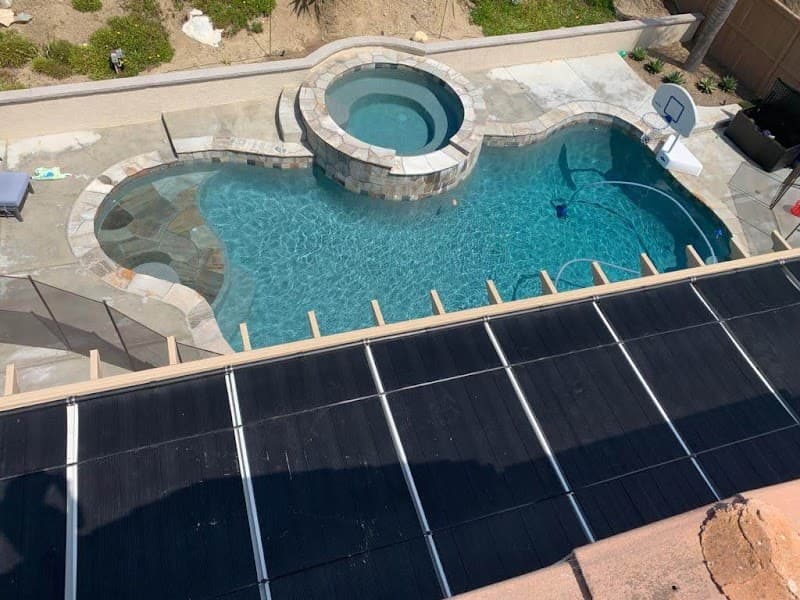
Temecula-based since 2001 — the deepest local track record by margin, with 594 verified reviews. A combined solar and water-systems business, which is a tradeoff: solar isn't their only specialty, but their tenure means they've installed under three different NEM regimes and have the warranty paper trail to prove it. Worth a quote if longevity and local-only operation matter more than singular focus.
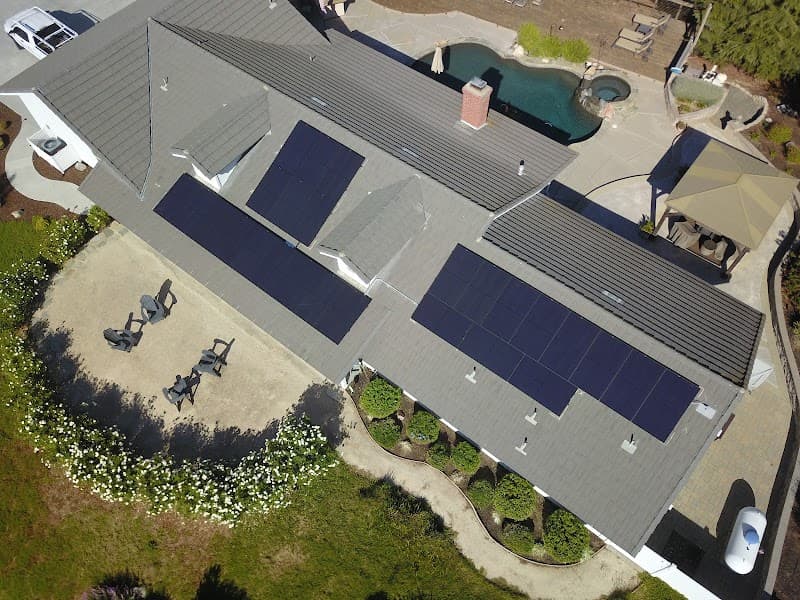
Smaller, focused, top of the Google local pack for 'solar companies in temecula' with a clean five-star profile across 98 reviews. The right call if you want a tight, in-and-out crew that does solar and only solar — but the review pool is small enough that one bad project would move the average meaningfully. Verify their CSLB license is in good standing before signing.
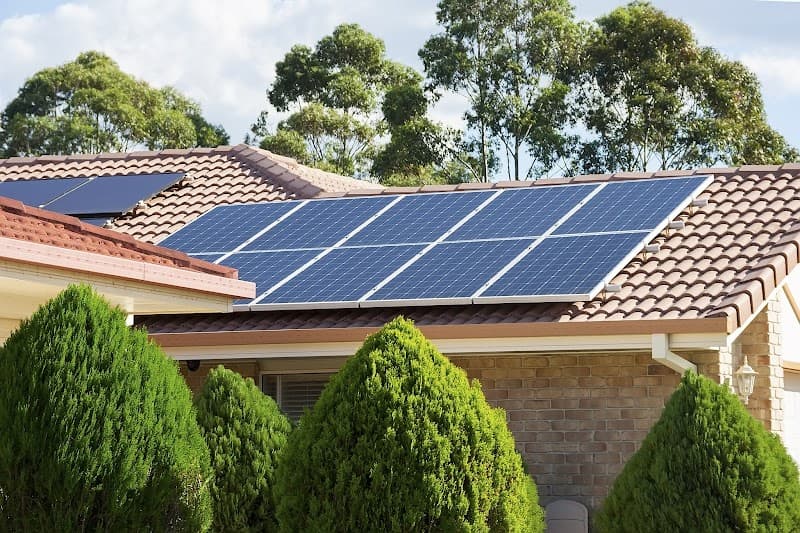
Murrieta-based with 118 reviews, strong post-install service profile in the BBB data. Serves the entire Temecula Valley, but Murrieta-out means the drive adds time to any service call to far east Temecula. The pick if you've already lived in the valley long enough to have neighbors who used them — the word-of-mouth is the differentiator, not the sales pitch.
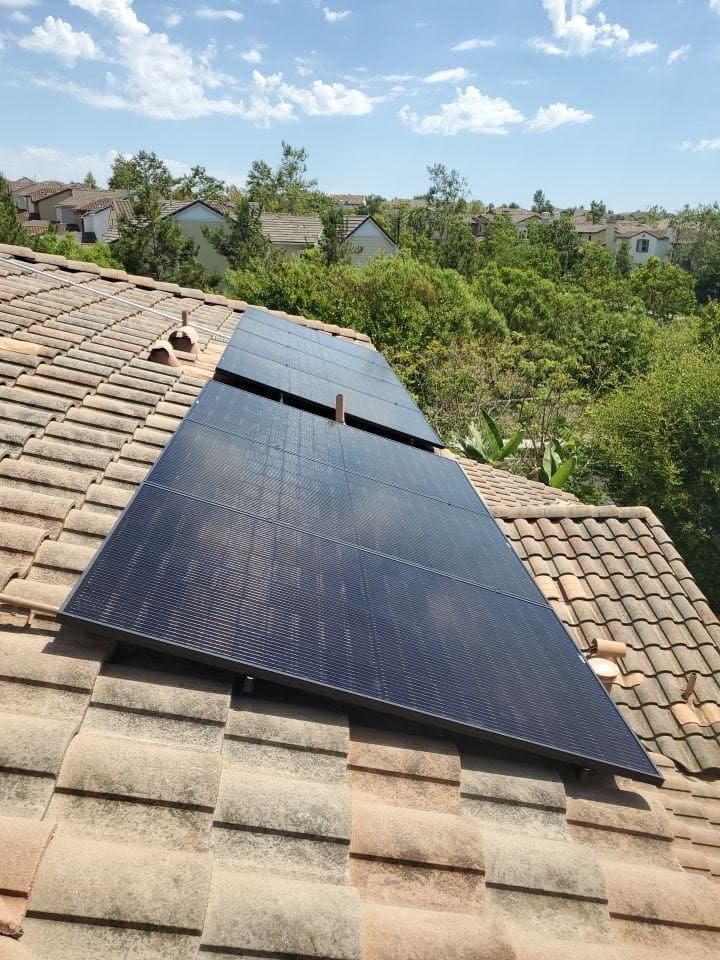
Lake Elsinore-based and electrical-first — Blalock is a full-service electrician that also installs solar, which means service calls after install draw from a deeper bench. The tradeoff is that solar isn't 100% of the shop's revenue mix, so they're less likely to be the lowest bid. Right call if you also need a panel upgrade or EV charger installed alongside the solar — one contractor, one inspection.
Lease, PPA, Loan, or Cash — None Are Equal
Four ways to pay for solar, and only one of them is structurally favorable in the post-credit, post-NEM-3.0 era.
| Structure | Own Panels | Get Credit | Monthly Payment | Best For |
|---|---|---|---|---|
| Cash | Yes | N/A (credit expired) | $0 after install | Owners with cash, no opportunity cost concerns |
| Solar Loan | Yes | N/A | Loan service for 10-20 years | Owners with good credit, want ownership |
| PPA (Power Purchase Agreement) | No | No | Per-kWh payment to installer | Owners who don't want capital outlay; weakest structurally |
| Solar Lease | No | No | Flat monthly with annual escalator | Almost no one in 2026 — escalators usually erode savings within 7 years |
Top of Temecula analysis based on current installer offerings, May 2026. Verify your specific quotes.
The decision framework is more nuanced than the table can show:
How to Decide if Solar Still Makes Sense for You
- If you want You own your home and plan to stay 8+ years, can add battery storage, and have an unshaded south-facing roof under 10 years old →
- Solar still makes financial sense — but get 3 quotes — Tradeoff: $20K–$35K upfront for battery-included system. Payback ~7–8 years. Beats SCE rate increases for the long horizon.
- If you want You own your home but plan to sell within 5 years →
- Skip solar — the math doesn't recover in your hold period — Tradeoff: appraisal lift from solar averages 4% of home value in CA, but financing transfer and buyer-side appraisal friction often offset that. Net-positive only if you stay long enough to use the production.
- If you want You rent, lease, or live in a property where you don't make the structural decisions →
- Solar is not your decision to make — Tradeoff: none. The cost-bearer is the property owner; talk to your landlord if utilities are in your name.
- If you want You got an unsolicited '$0 down, save thousands' pitch via cold call, door-knock, or social media ad →
- Walk away — and report to FTC and CSLB if pressured — Tradeoff: nothing. The Treasury and FTC have specifically flagged door-to-door solar leases as a 2025–2026 fraud focus. A legitimate installer doesn't need to cold-call you.
Local vs National: Why It Matters More Now
The Freedom Forever bankruptcy made visible what was already true: large national chains contract service through regional partners, and those partners can become unavailable. Multiple BBB complaints describe being told that the installer's "Travel Technician Team was not in the service area" with no firm timeline for when service would resume — a fail mode that's almost unique to national operators. Local installers don't have a Travel Technician Team. They have their own van.
Top of Temecula's directory now tracks 45 active solar installers across the valley, from Lake Elsinore to Murrieta to Temecula proper. The local-vs-national tradeoff used to be price: nationals could quote 10–15% lower because their cost of customer acquisition was spread across markets. In 2026, with the federal credit gone and NEM 3.0 making the system economics less generous, that 10–15% pricing edge no longer makes up for a multi-week service-response gap when something goes wrong. The Travel Technician problem isn't theoretical for Temecula — it's already happened to current Freedom Forever customers, and it'll happen again the next time a national chain restructures.
What to verify before signing with any installer, local or national: pull their CSLB license number from cslb.ca.gov and check (1) the license is active and not on probation, (2) the bond and workers' comp insurance are current, and (3) there are no Accusation or Citation records open. CSLB makes all of this public and free to search. If an installer hesitates to share their license number, that's the entire conversation.
What Most Temecula Homeowners Get Wrong
Three things, in order of cost.
First, they treat the contract date as the federal-credit qualifying date. It isn't. The IRS counts "placed in service" — meaning permitted, installed, and producing. Anyone whose installation slipped into 2026 lost a credit they thought they had.
Second, they assume their HOA can stop them. Most HOAs operate on a pattern of aesthetic objection followed by a slow no. California Civil Code §714 makes that pattern unenforceable, but the homeowner has to know the 45-day deemed-approval rule, document their submission, and be willing to insist. Most don't, so the slow-no works.
Third, they confuse the sales relationship with the service relationship. The same sales rep who answered every text during quoting goes silent the day after install. That isn't unique to one company — it's the structural pattern across the industry. The service contract you sign should specifically name a service-response window in writing. If it doesn't, you have no leverage when production drops and the monitoring app says "system offline."
The Temecula Solar Homeowner Checklist
Print this and have it in front of you before you sign anything.
- Pull the installer's CSLB license number. Verify active, no probation, no open citations.
- Get three written quotes. Compare cost-per-watt, not total price. Range: $2.14–$3.22/W is current Temecula market.
- Ask explicitly: "Is a battery included or quoted separately?" Get the battery line item.
- Confirm the installer is SolarAPP+ registered for the 3-day expedited permit path.
- For the HOA: submit a complete application with date-stamped delivery. Calendar day 45.
- Read the workmanship warranty. Look for: response-time guarantee, transfer-on-sale clause, what happens if the installer dissolves.
- Read the financing contract separately from the install contract. They are independent obligations.
- Document your system's first 30 days of production. Screenshot the monitoring app weekly.
- Save every email. The day the installer goes silent, you'll need the paper trail.
While you're researching, here's what else is going on locally:
Pricing, availability, and details for businesses mentioned in this guide were last verified against our live directory in May 2026. Contact providers directly for current rates.