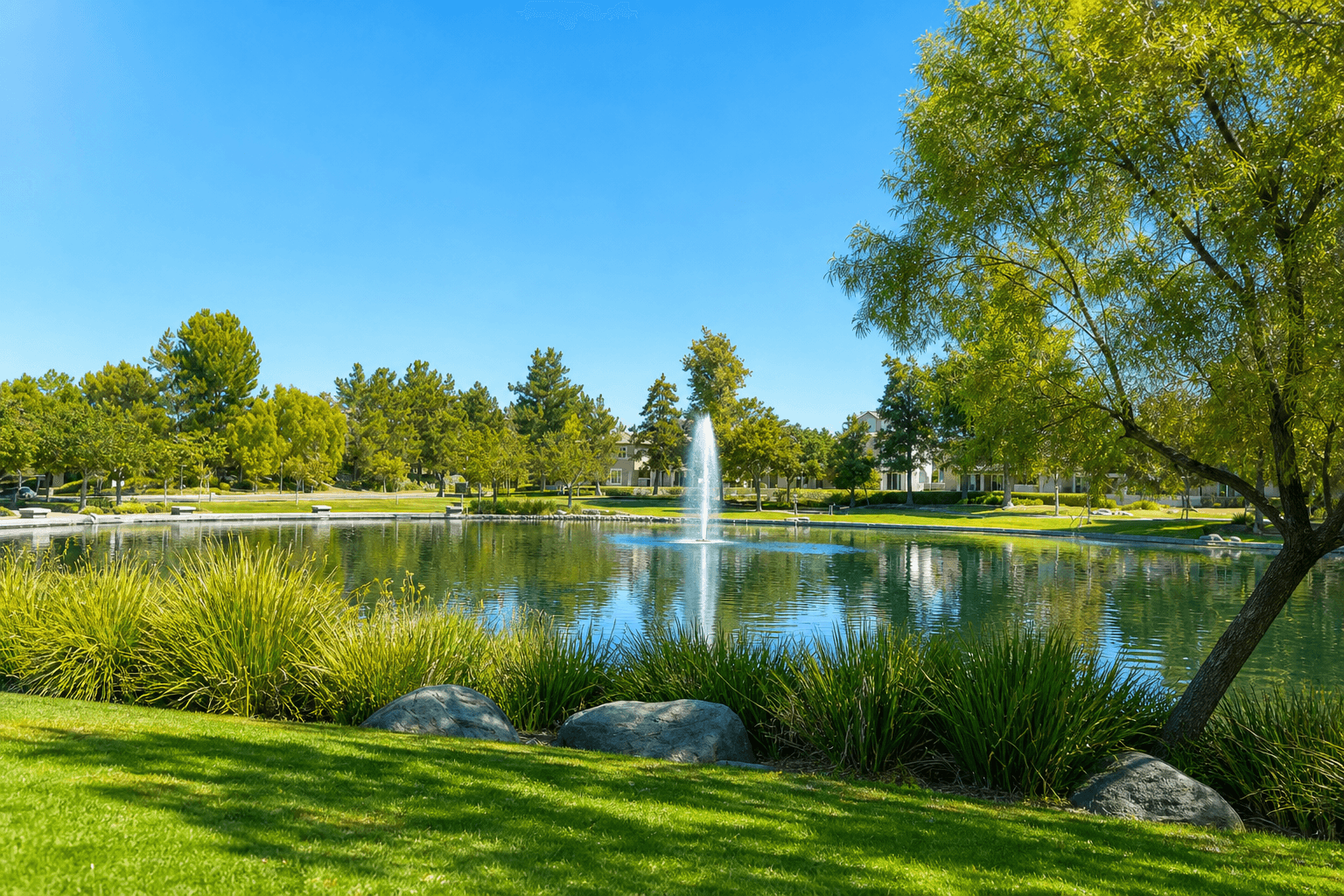
On September 3, Temecula Parks & Rec explained why algae grows in Harveston Lake during hot, dry summer weather: the closed lake loses water to evaporation while nutrients remain and become more concentrated. The more consequential fact for anyone who walks the loop is older and less discussed: state monitoring in 2014 found the lake over both the WHO and OEHHA recreational-water thresholds for a cyanobacteria toxin. Our position is that Harveston is a lake to look at, and the water itself is not for people or dogs.
A Lake With No Way In and No Way Out
"Harveston is a closed body of water, meaning there are no natural inflows or outflows," the Temecula Parks & Rec account posted on Instagram on September 3. During hot, dry summer weather, the post continues, water evaporates while nutrients remain behind and become more concentrated, those nutrients fuel algae growth, and when the algae die and decompose that process uses the oxygen dissolved in the water.
That is the cycle, but residents can avoid adding one pressure: the city says feeding ducks people food contributes to declining water quality. NOAA Ocean Service describes the same back end in general terms: the bacteria that break down dying bloom matter pull oxygen levels down and can push water into hypoxic conditions. Harveston's closed-water conditions and hot, dry summer weather create the nutrient concentration Parks & Rec says fuels algae growth.
Weekend Sherpa describes Harveston as a 17-acre park with a one-mile route encircling the water. The city's explanation covers bloom mechanics, but it does not provide a current toxin measurement.
Cyanobacteria, Microcystin, and What the 2014 Sampling Found
Not all algae carries the same risk, and the distinction is the entire public-health question. The State Water Resources Control Board attributes harmful algal blooms to certain types of cyanobacteria that can produce toxins harmful to people and animals. Because only certain types of cyanobacteria can produce toxins, an algae bloom is not by itself proof that toxins are present.
The verified historical measurement for this lake comes from 2014. A State Water Board SWAMP monitoring report found that Harveston Lake, along with Santee Lake #5, exceeded WHO guidelines for safe recreational water environments and OEHHA action levels for human recreational uses, with microcystin measured up to 7.69 mg/L in 2014.
That reading is twelve years old. The city's September 3 post explains how blooms form at Harveston but provides no current toxin measurement. A twelve-year-old exceedance is not a current advisory, but it supports our conservative recommendation: keep people and dogs out of the lake.
State Guidance and Dog Exposure Routes
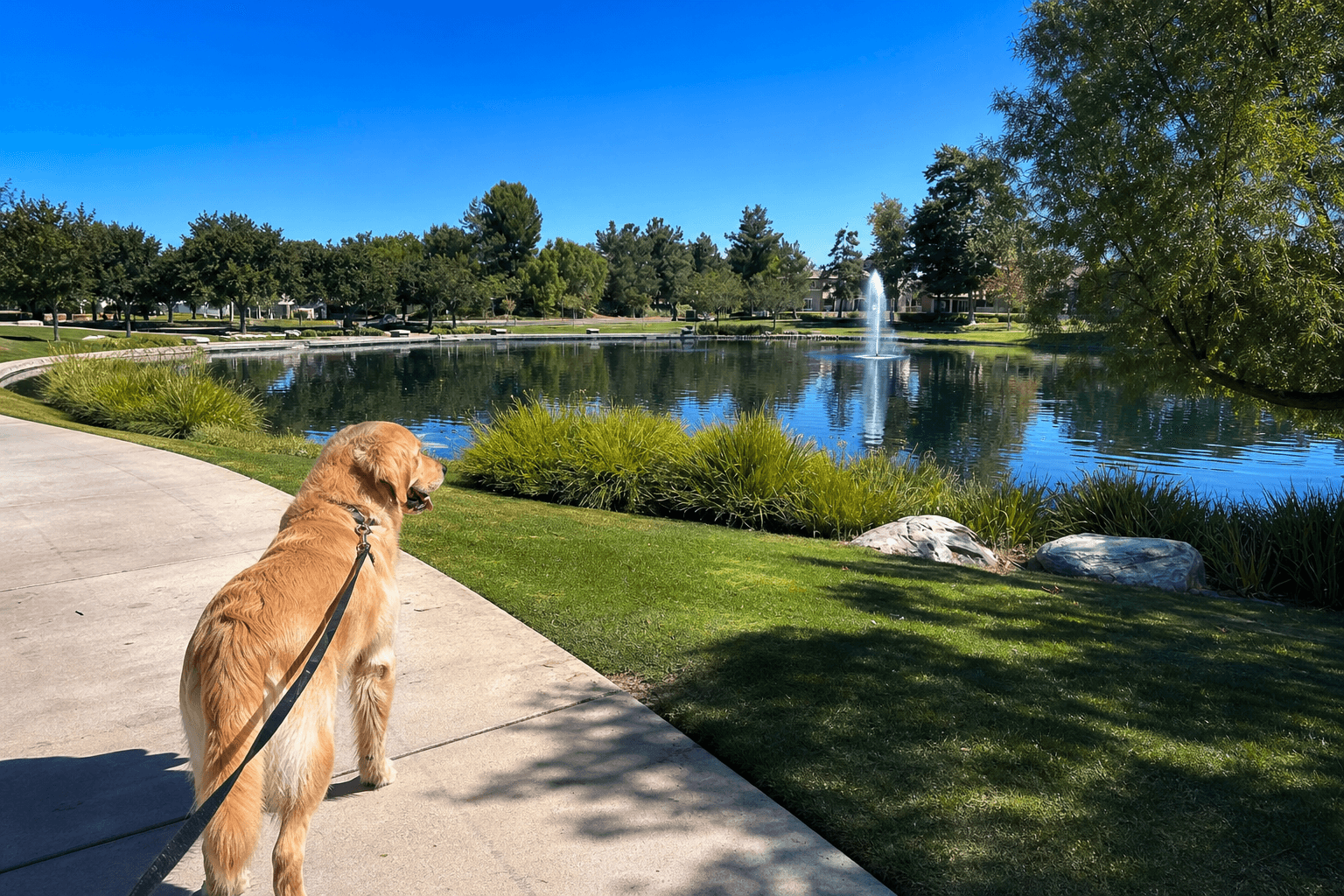
The Water Board's framing covers animals as well as people, and National Geographic identifies several exposure routes for dogs. National Geographic describes the exposure routes: skin contact with contaminated water, drinking it, eating algae directly, and ingesting toxins later by grooming fur and paws after being in the water.
Our advice for the one-mile route is simple: keep the leash short enough that the dog finishes the loop dry.
Feeding the Ducks Is Prohibited at Harveston Lake Park
Feeding the ducks at Harveston Lake Park is prohibited under City of Temecula regulations. The city separately warns that feeding ducks people food contributes to a decline in water quality, alongside duck overpopulation and dietary problems in the birds themselves. The practical neighborhood rule is straightforward: leave the bread at home.
Two other facts about the lake circulate locally and deserve to be stated accurately rather than folded into the algae story. A City of Temecula water resources document states that all of Harveston is irrigated with reclaimed water, including the lake. Harveston News puts approximately 1,600 homes around the 17-acre lake.
Locals' Take: For Harveston residents, the practical version is short. The lake is a view and a walking route, the ducks eat nothing you brought, and the dog stays on the path. The September 3 Parks & Rec post explains bloom formation but does not include a current microcystin measurement, so our recommendation is to keep people and dogs out of the water.
Residents can get the next Harveston water update by email for the next local update.
Frequently Asked Questions
- Why does Harveston Lake turn green in the summer?
- Temecula Parks & Rec posted on September 3 that Harveston is a closed body of water with no natural inflows or outflows. In hot, dry weather, water evaporates while nutrients remain behind at higher concentrations, and those nutrients fuel algae growth.
- Can you feed the ducks at Harveston Lake Park?
- No. Feeding the ducks is prohibited under City of Temecula regulations, and the city warns that feeding ducks people food contributes to a decline in water quality along with duck overpopulation and dietary problems.
Sources
- Temecula Parks & Rec, September 3 Instagram post on Harveston Lake
- City of Temecula, Harveston Lake Park facility page (duck feeding and water quality)
- City of Temecula, park rentals page (duck feeding prohibition)
- California State Water Resources Control Board, caution around harmful algal blooms
- State Water Board SWAMP, 2014 cyanobacteria monitoring report
- NOAA Ocean Service, hypoxia and decomposing algal blooms
- National Geographic, cyanobacteria toxin exposure in dogs
- Weekend Sherpa, Harveston Lake in Temecula
- Harveston News, community amenities
- City of Temecula, water resources document