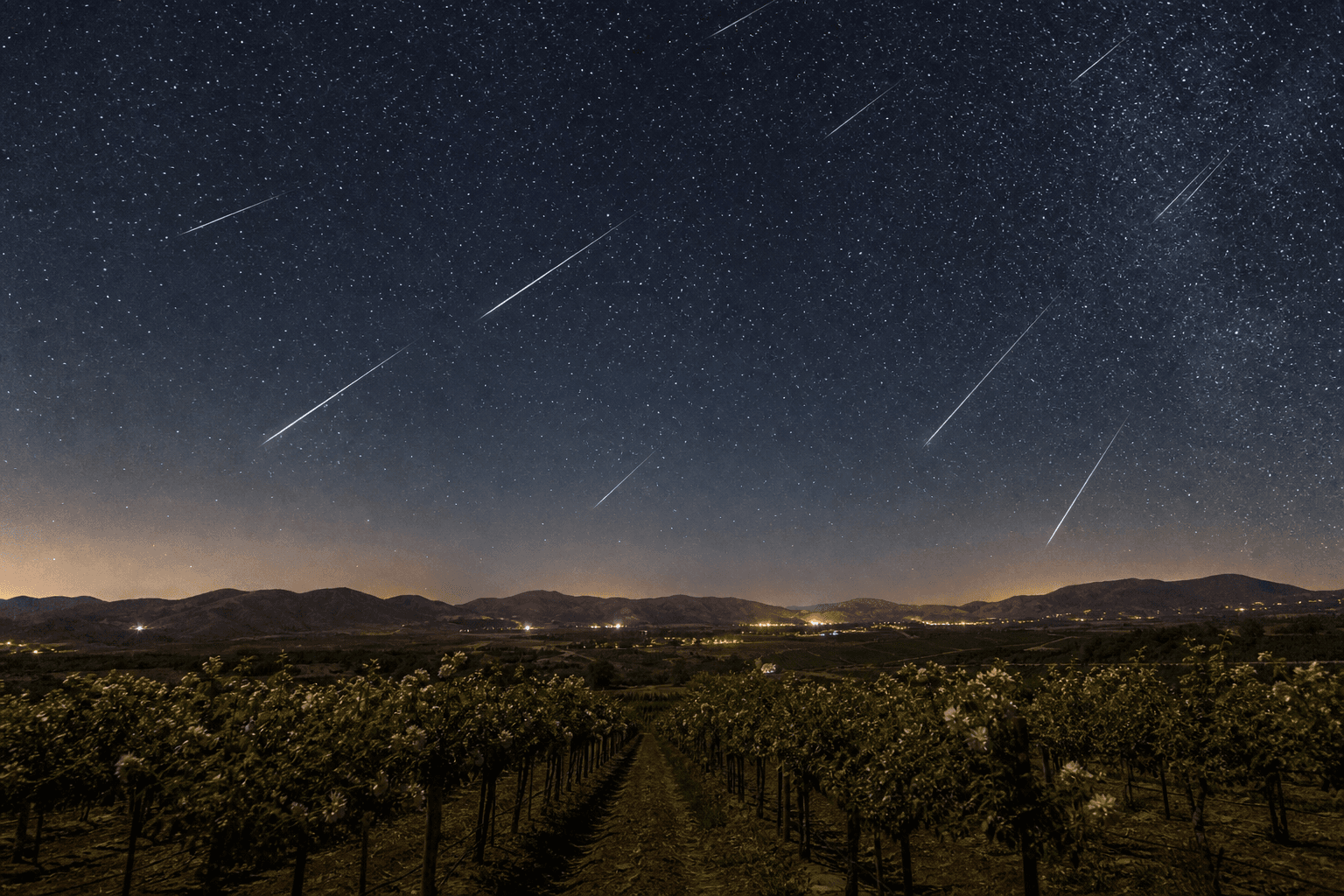
The Perseid meteor shower peaks the night of August 12 into the predawn hours of August 13, 2026, and 2026 is a strong year for summer skywatching around Temecula because a new moon falls at 17:37 UTC on August 12, putting the peak under a dark, moonless sky (EarthSky). The American Meteor Society lists a zenithal hourly rate of about 100, and under those dark conditions skywatchers frequently report 90 or more meteors per hour (American Meteor Society). This is a roundup for locals deciding where to point their lawn chairs, ranked from the free Rancho California Road club setup to the mountain drives worth the gas.
The Perseids Peak August 12-13 Under a Dark Sky
The shower runs from July 17 through August 24, with the peak overnight August 12 into the morning of August 13 (EarthSky). The meteors come off Comet 109P/Swift-Tuttle and hit the atmosphere at roughly 37 miles per second, which is why the bright ones often leave a glowing train that hangs for a second or two after the streak is gone (Farmers' Almanac). Go after midnight, face generally northeast, and keep as much sky in view as possible instead of staring at one point.
There is a rare wrinkle this year. A total solar eclipse falls on the same calendar day, August 12, but its path of totality only crosses the Arctic, Greenland, Iceland, northern Spain and the northeastern tip of Portugal, so no part of that is visible from Temecula (NASA). The peak sits so close to the new moon that observers standing under that eclipse might catch a few Perseids during totality (EarthSky). Then a very deep partial lunar eclipse arrives the night of August 27-28, with about 93 to 96% of the moon sliding into Earth's umbra and maximum at 9:12 p.m. PDT on August 27 for Pacific-time observers (Space.com). That one is a backyard event: no drive, no altitude, just a chair facing east after dark.
Free Star Parties at South Coast Winery
According to the NASA Night Sky Network, the Temecula Valley Astronomers host regular free public star parties at South Coast Winery, 34843 Rancho California Road, typically on Friday evenings around sunset, weather permitting (NASA Night Sky Network). That puts you in the Rancho California Road winery corridor, with club telescopes already set up and members happy to point them for you. Check South Coast Winery details before you go for parking and access. The club is a 501(c)(3) nonprofit of Southwest Riverside County enthusiasts, and it also holds monthly meetings at the Ronald H. Roberts Temecula Public Library, 30600 Pauba Road, Room B, from 6 to 8 p.m. (Temecula Valley Astronomers). One planning note that matters for the Perseids: August 12 is a Wednesday, not the club's usual Friday, so confirm on the club site whether they are running a special peak-night event.
Palomar Observatory: The One-Hour-15 Day Trip
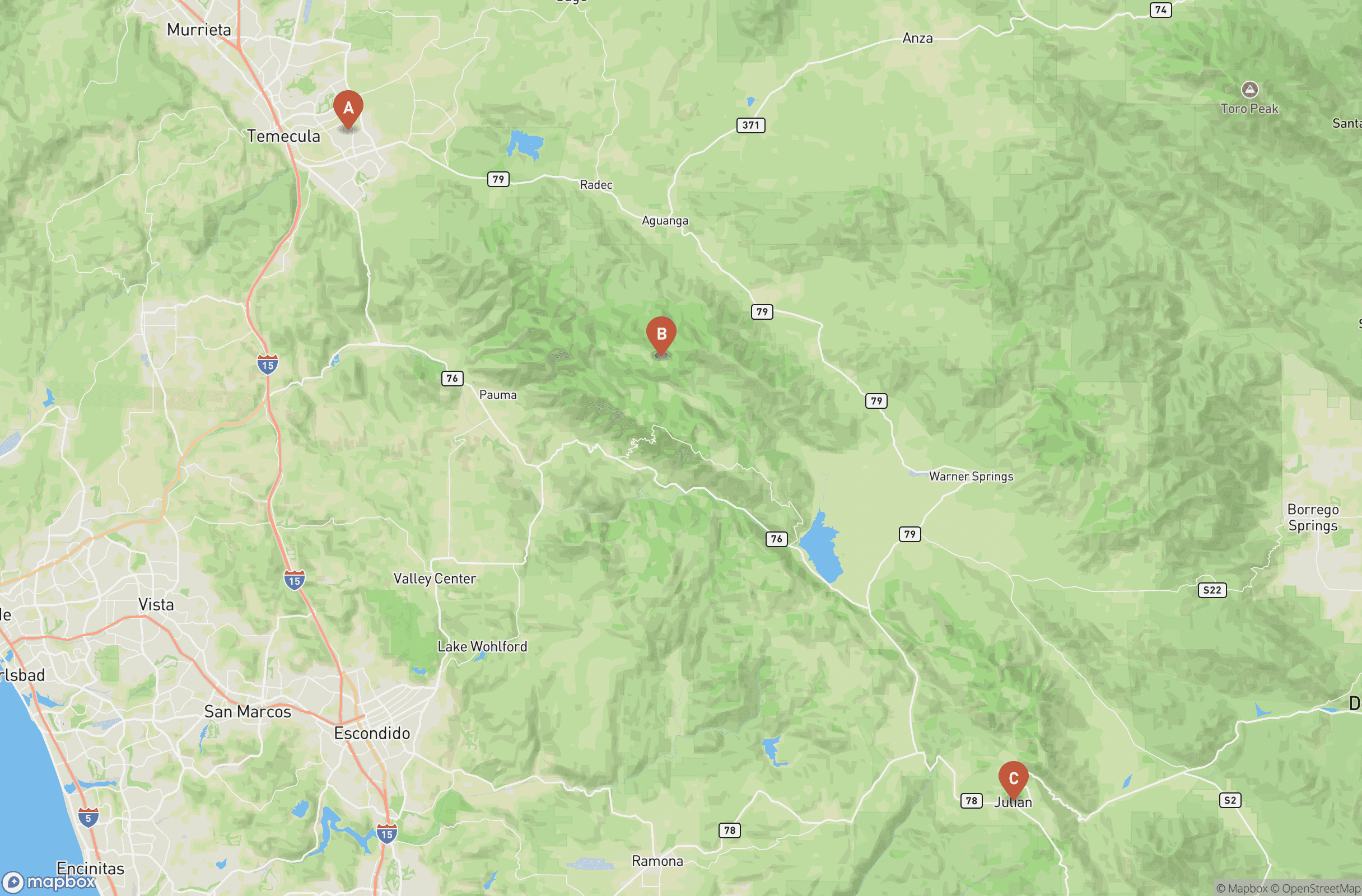
Palomar Observatory, atop Palomar Mountain in north San Diego County, is open to the public most days from 9 a.m. to 3:30 p.m., with guided tours of the 200-inch Hale Telescope offered on weekends from roughly April through October; the drive from Temecula runs about an hour and 15 minutes (Palomar College). This is a daytime trip, not a meteor-viewing spot, but it is the best astronomy field trip within range. The 200-inch Hale Telescope began science operations in 1949 and held the title of largest telescope in the world for 26 years, which is why the dome still feels like a pilgrimage stop for astronomy people (Palomar Observatory). Pair a weekend tour with a Perseids night elsewhere and you have made a full astronomy weekend of it.
Julian and the Dark-Sky Pull-Offs Worth the Drive
For genuinely dark skies in July, Julian beats the desert. It was accredited as an International Dark Sky Community in May 2021, only the second in California, and sits at about 4,235 feet in the Cuyamaca Mountains with Bortle 3-4 skies (DarkSky San Diego County). For the darkest view, Kwaaymii Point sits along Sunrise Highway (County Road S1) near mile marker 27.8 south of Julian, a paved pull-off at about 5,400 feet with an unobstructed eastern view over the Anza-Borrego desert floor and no artificial light on the horizon (SmallTownsCA). Borrego Springs itself has darker skies still, Bortle Class 2 inside Anza-Borrego Desert State Park, but July temperatures there regularly top 110°F with nighttime lows in the 80s, which makes it a winter destination rather than a Perseids call (SmallTownsCA). Anza-Borrego earned its International Dark Sky Park status in 2018, and it is worth a return trip once the heat breaks (California State Parks). Same local rule applies here as it does for any inland summer outing: elevation helps; the desert floor does not.
Field Note: August 12 is a Wednesday, so the parent packing a kid and a thermos for the Perseids should not assume the regular Friday winery star party is the plan unless the Temecula Valley Astronomers post a special peak-night event. If you can handle the late night, Julian and Kwaaymii Point are the better meteor drives; if you cannot, the August 27 lunar eclipse comes to you, with maximum at 9:12 p.m. and no drive required.
Frequently Asked Questions
- When do the Perseids peak in 2026?
- The Perseid meteor shower peaks the night of August 12 into the predawn hours of August 13, 2026. The shower is active from July 17 through August 24.
- Where can I watch a free star party near Temecula?
- The Temecula Valley Astronomers host free public star parties at South Coast Winery, 34843 Rancho California Road, typically on Friday evenings around sunset, weather permitting.
- How far is Palomar Observatory from Temecula?
- Palomar Observatory is about an hour and 15 minutes' drive from Temecula. It is open to the public most days from 9 a.m. to 3:30 p.m., with weekend guided tours of the Hale Telescope from roughly April through October.
- Is Borrego Springs a good summer stargazing spot?
- No. Borrego Springs sits in Bortle Class 2 skies but July temperatures there regularly exceed 110°F, making it a winter stargazing destination rather than a summer one.
Sources
- EarthSky, Perseid meteor shower 2026
- American Meteor Society, Meteor Shower Calendar 2026-2027
- Farmers' Almanac, Perseid Meteor Shower 2026
- NASA Science, Total Solar Eclipse on August 12, 2026
- Space.com, August 2026 lunar eclipse
- Temecula Valley Astronomers, official site
- NASA Night Sky Network, TVA Star Party at South Coast Winery
- Palomar College, Palomar Observatory Tour info
- Palomar Observatory, History of the 200-inch Hale Telescope
- DarkSky San Diego County, Local Dark Skies
- SmallTownsCA, Julian Stargazing Guide 2026
- SmallTownsCA, California Stargazing Guide 2026
- California State Parks, Anza-Borrego Dark-Sky Park news release