The valley's neighborhood threads keep circling the same four practical questions, and the best Temecula local recommendations start with what the public record actually says rather than a crowdsourced guess. Whether a home carries Mello-Roos, what 92592 houses really cost, which wedding venues the tourism board officially names, and why I-15 eats your commute are all answerable from city, Caltrans, and primary-source documents. Here's what those documents say, before you sign anything or book anyone.
Before You Buy: What Mello-Roos Actually Pays For
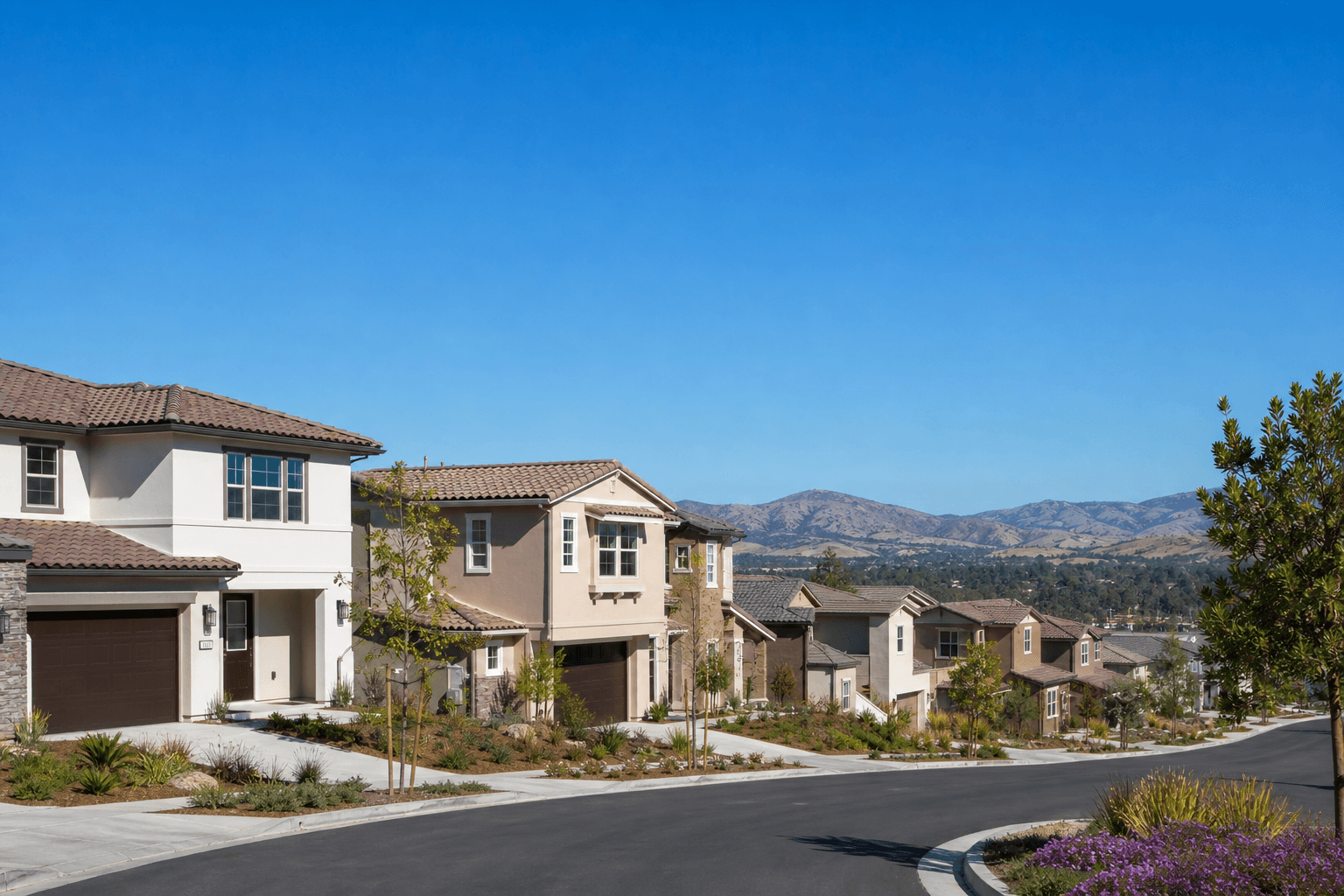
The recurring "how do I find a cheap Temecula home without hidden costs" question almost always runs into Temecula Mello-Roos. A Mello-Roos Community Facilities District imposes a special property tax, on top of your normal property tax, on every parcel inside the district boundaries. According to the City of Temecula's Debt Management page, that money finances streets, water, sewage and drainage, electricity, infrastructure, schools, parks and police protection in newly developing areas. It is not a one-time fee. It is a line item that rides with the property.
The short version: after Proposition 13 limited ordinary property-tax growth, Mello-Roos became one of California's tools for making new subdivisions pay for the infrastructure they needed. That history matters less than the monthly math, but it explains why newer Temecula neighborhoods can carry a tax bill that looks very different from an older central-Temecula parcel.
There is also a smaller, separate assessment worth knowing before you read a tax bill in a panic. Under Temecula's voter-approved Measure C, passed in March 1997, every single-family residential and condominium parcel pays $25.68 a year for Service Level B residential street lights through the Temecula Community Services District, per the city's Debt Management figures. That one is citywide and modest. Mello-Roos is the one that varies wildly.
And it varies by parcel in a way that should shape where you look. My read: if your budget is tight, the cheaper-looking new-build south of town can quietly cost more per month than an older central-Temecula house at a higher sticker price. Do not rely on neighborhood folklore; ask for the special-tax disclosure before you fall in love with a floor plan.
The 92592 Reality: What Homes Actually Cost Right Now
Zillow window-shoppers want the real number, not a vibe. The 92592 housing market gives one: in March 2026, homes in the ZIP sold for a median of $775,000, up 1.6% year over year, with properties moving after about 40 days on the market, according to Redfin. That is a market that has cooled to a walk. A 40-day median is not a bidding-war pace, which means buyers have room to read disclosures, including the Mello-Roos one, without losing the house to someone waiving everything.
The schools are a real part of why people pay that median, but do not price a house off a ranking site alone. Verify the assigned Temecula Valley Unified campus by address, check current boundaries, and then decide how much of the 92592 premium is actually buying the school fit your household needs.
For scale on what you're buying into: this is a mid-size Southwest Riverside city with big-suburb housing demand, and the 92592 numbers reflect a place people move to on purpose, not one they pass through.
Wedding Venues: Start With the Official Temecula List
If you're an out-of-state couple staring at a hundred Instagram tags, the smartest anchor for Temecula wedding venues is the one the tourism board publishes itself. Visit Temecula Valley recommends winery wedding venues including Callaway Vineyard & Winery, Leoness Cellars, Peltzer Farms, South Coast Winery Resort & Spa, and Wilson Creek Winery, and points to Pechanga Resort Casino for resort-style hotel weddings. Start there, not in a comment thread. That list is a curated baseline from the organization whose job is knowing the valley's venues.
Of those, South Coast carries the heaviest credentials. South Coast Winery Resort & Spa sits on 63 acres of certified sustainable vineyards and was named California Winery of the Year five times at the California State Fair competition, a record for any California winery, per its own site. For a destination couple, "five-time state Winery of the Year with a resort and spa on site" is the kind of fact that settles an argument over which venue to tour first.
Pechanga is the other end of the spectrum, and it answers a different question: how to handle a large, out-of-town guest list without making everyone shuttle between a vineyard, a hotel block, and late-night plans. The official list gives you both ends of the range: intimate vineyard or full-resort. Pick by guest count first, aesthetics second.
For Event Planning, Start With the Scale of Temecula Wine Country
Before you build a guest itinerary, know the scale you're planning inside. Temecula Valley wine country spans 33,000 acres with 47 wineries, central to San Diego, Los Angeles and Orange County, according to the Temecula Valley Winegrowers Association. That is not a couple of tasting rooms you knock out in an afternoon. It's a region, and a weekend itinerary that pretends otherwise will leave half your guests stuck in a car.
This didn't happen overnight. The first commercial vineyard in Temecula Valley went in back in 1968, per Visit Temecula Valley, which notes the wineries now cluster mostly east of I-15 along Rancho California and De Portola Roads. That clustering is the planning detail that matters: keep your venue and your tasting stops on the same side of the freeway and you save your guests the worst of the I-15 problem entirely.
The economics confirm this is a serious destination, not a side trip. The Riverside County wine and winegrape industry, driven largely by the Temecula Valley AVA, delivers $2.7 billion in annual economic impact, and the region drew 885,300 tourist visits, more than half of them to Temecula Valley AVA wineries, per the Winegrowers Association. Nearly half a million people a year choosing these wineries is its own recommendation. If you want the full lay of the land before you plan, our Temecula winery map breaks down the three main corridors.
The Drive Everyone Complains About, And What's Being Done
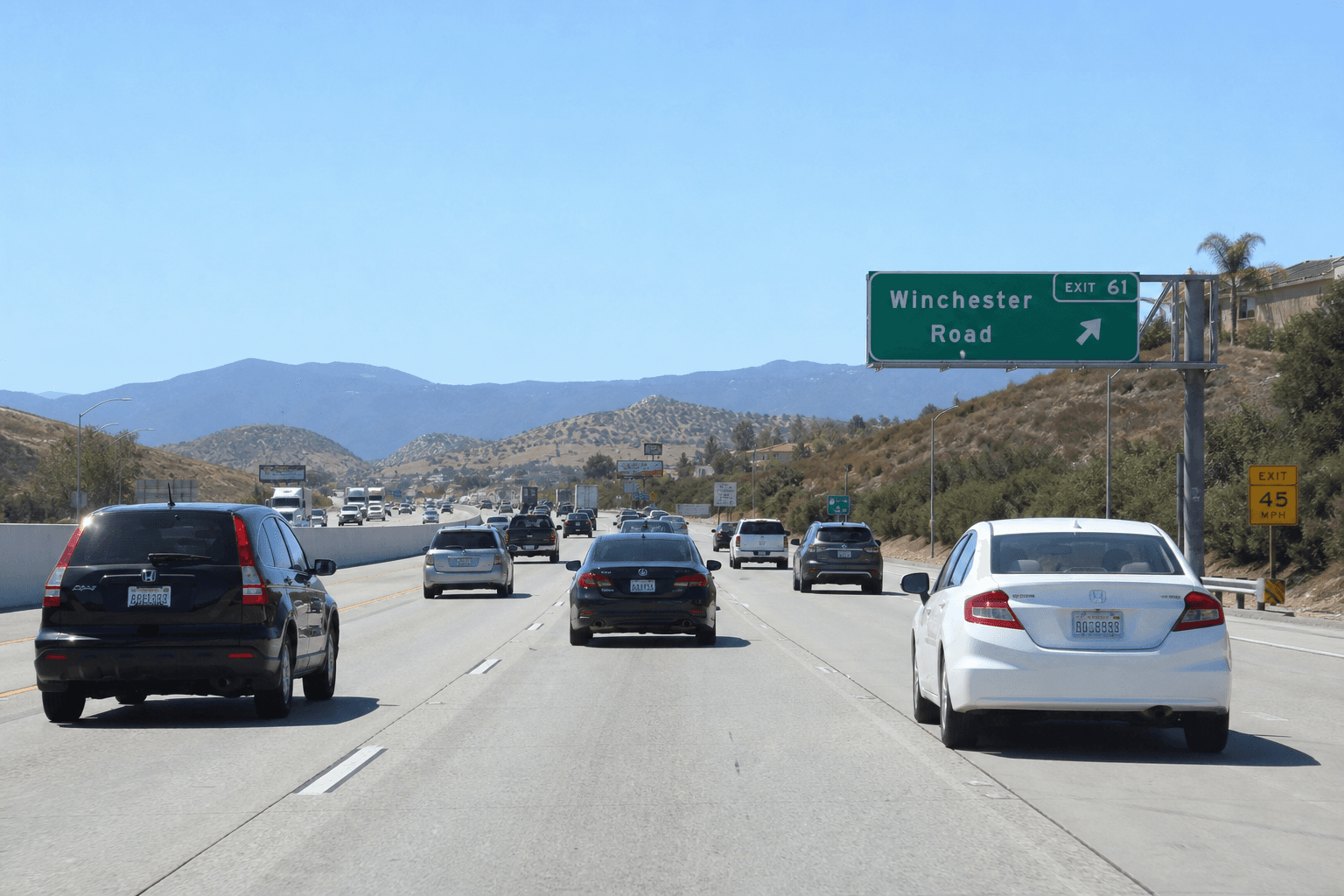
The "one hour and 50 minutes from Rancho" gripe is not an exaggeration. On northbound I-15 between Winchester Road and the I-15/I-215 junction, high vehicle volumes cause back-ups into San Diego County ranging from 3 to 12 miles every weekday and on many weekends, according to the City of Temecula. That's the documented condition, not a Nextdoor complaint, and it's the single biggest tax on living here that no one lists at closing.
The city is building toward a fix. It began design, environmental and right-of-way activities on the I-15/French Valley Parkway Improvements in April 2025 and expects to complete the work in March 2029, per the project page. The project includes a new collector/distributor system along I-15 between Winchester Road and the I-15/I-215 junction plus modifications to the Winchester Road interchange, and the same page notes Phase 2 construction was largely completed in April 2025.
Caltrans is working a separate, adjacent piece. Caltrans District 8 proposes to construct I-15 auxiliary lanes connecting the entrance and exit ramps between the Temecula Parkway and Winchester Road interchanges, from Post Mile R3.5 to Post Mile R6.8. The city interchange work runs between Winchester Road and the I-215 junction, while the Caltrans auxiliary lanes proposal runs from Temecula Parkway up to Winchester Road: adjacent segments that, if both are completed, would address consecutive portions of the same northbound corridor.
That distinction matters when you're deciding whether to buy now or wait. The city's own completion target is March 2029. The Caltrans auxiliary lanes are a proposal, not a dated build. So the honest read for a buyer weighing a south-Temecula commute: relief on the city's collector/distributor piece is years out, and the segment Caltrans wants to fix is earlier in the planning chain still.
The Drive: If you're the new buyer comparing a south-Temecula new-build against an older central-Temecula house, the I-15 documents are part of your math, not background color. The city's collector/distributor work between Winchester Road and the I-215 junction is dated to March 2029; the Caltrans auxiliary-lanes segment below it is still a proposal. Buy assuming today's 3-to-12-mile northbound back-up is your commute for the next several years, and treat any earlier improvement as upside. Watch the city's French Valley Parkway page for the next construction milestone.
Frequently Asked Questions
- What does Mello-Roos pay for in Temecula?
- A Mello-Roos Community Facilities District levies a special property tax on top of normal property tax to finance streets, water, sewage, drainage, electricity, schools, parks and police protection in newly developing areas.
- What is the median home price in Temecula's 92592 ZIP code?
- In March 2026, the 92592 median sale price was $775,000, up 1.6% year over year, with homes selling after about 40 days on the market.
- Which Temecula wedding venues does Visit Temecula Valley recommend?
- Visit Temecula Valley names Callaway Vineyard & Winery, Leoness Cellars, Peltzer Farms, South Coast Winery Resort & Spa, and Wilson Creek Winery, plus Pechanga Resort Casino for resort-style hotel weddings.
- When will the I-15 French Valley Parkway work be finished?
- The City of Temecula began design, environmental and right-of-way work in April 2025 and expects completion in March 2029.
Sources
- City of Temecula, Debt Management
- Redfin, 92592 Housing Market
- Visit Temecula Valley, Wedding Venues
- South Coast Winery, official site
- Temecula Valley Winegrowers Association, Wineries
- Visit Temecula Valley, Winery Map
- Temecula Valley Winegrowers Association, Economic Impact
- City of Temecula, I-15 / French Valley Parkway Improvements
- Caltrans District 8, I-15 Temecula Auxiliary Lanes Project