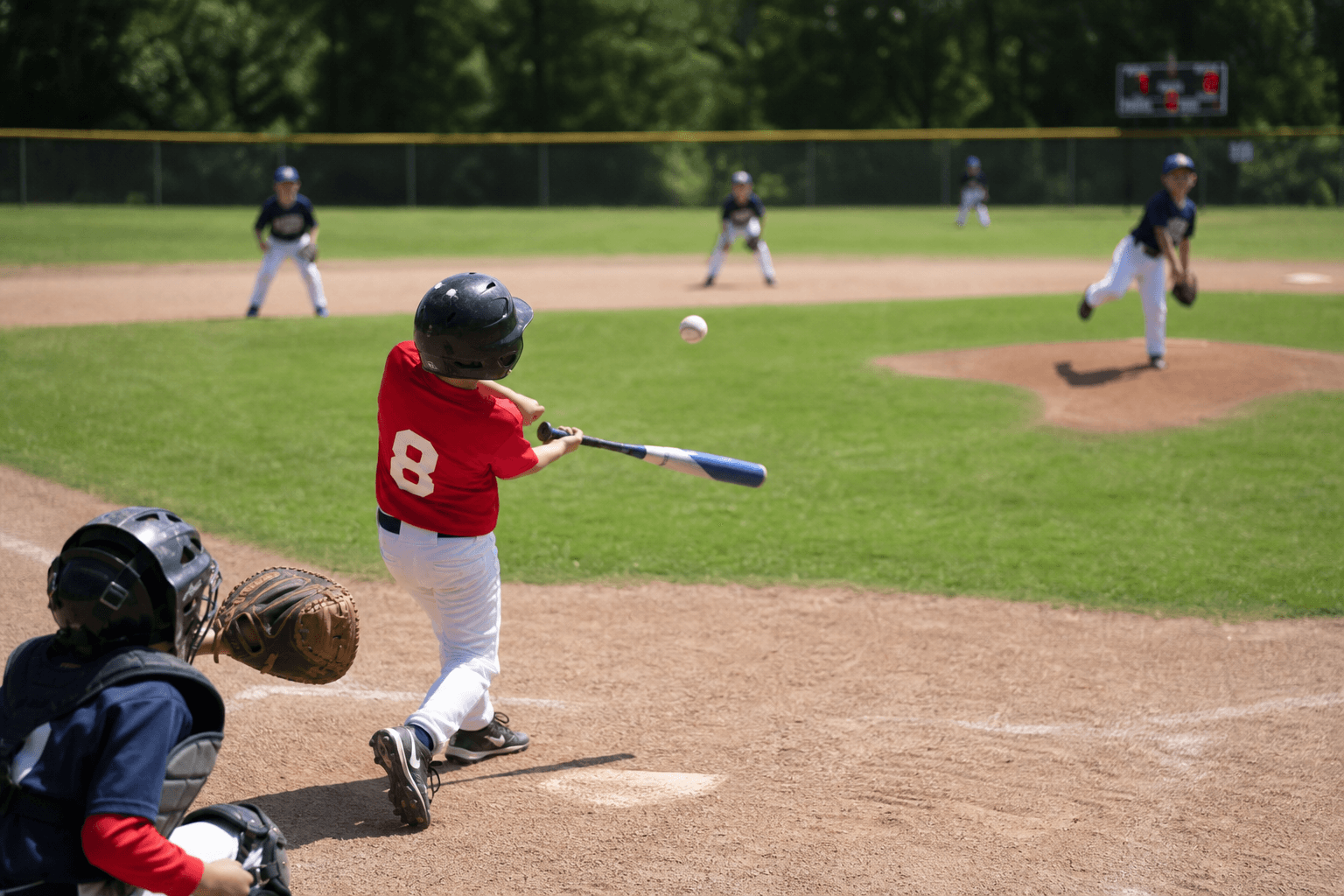
If you've been refreshing the Temecula parent group chats this week, you've already seen the question: D-BAT's roughly $300 summer week or the $150 Vista Murrieta camp for a 7-year-old who just discovered he likes baseball? The honest answer is that these camps aren't competitors, they're built for different kids at different stages, and for a first-summer 7-year-old, the cheaper option is the right one almost every time. The harder question parents should actually be asking is whether their kid needs a camp at all when Temecula Youth Baseball and i9 exist.
The Two Camps Every Temecula Parent Is Comparing Right Now
The Reddit post that kicked this off framed it as a price fight, and at publication the listed prices made it look like one. D-BAT Temecula at 26201 Ynez Road runs more than 50 camps, clinics, and classes a year out of a climate-controlled facility off the I-15 at Winchester. Strike Zone advertised lower-priced seasonal sessions at Vista Murrieta High School, but its current site later marked the June 13, 2026 hitting camp canceled. Treat the prices below as a comparison of formats, not confirmation that a session is available today.
But the setups have almost nothing in common. D-BAT is an indoor academy with 16 cages built around real baseballs and softballs, the kind of facility a serious player visits weekly for ten months a year. Strike Zone is a seasonal, coach-led camp program associated with Mike Moheit and Vista Murrieta. One is a national franchise with a full-time staff and a pro shop; the other depends on a posted camp date actually running.
That distinction matters because the question parents should be asking isn't "which is better." It's "which is built for my kid right now, and which one has a confirmed session?" A 12-year-old who has aged out of TYB's rec divisions and is trying to make a travel-ball roster gets something out of D-BAT's volume of reps that a short seasonal camp can't match. A 7-year-old who's never worn a glove usually needs fundamentals and game reps, not premium facility overhead. Vista Murrieta is also a CIF Southern Section Southwestern League campus, which gives a camp there a real high-school-field setting when one is scheduled.
Why D-BAT Costs More, And When It's Actually Worth It
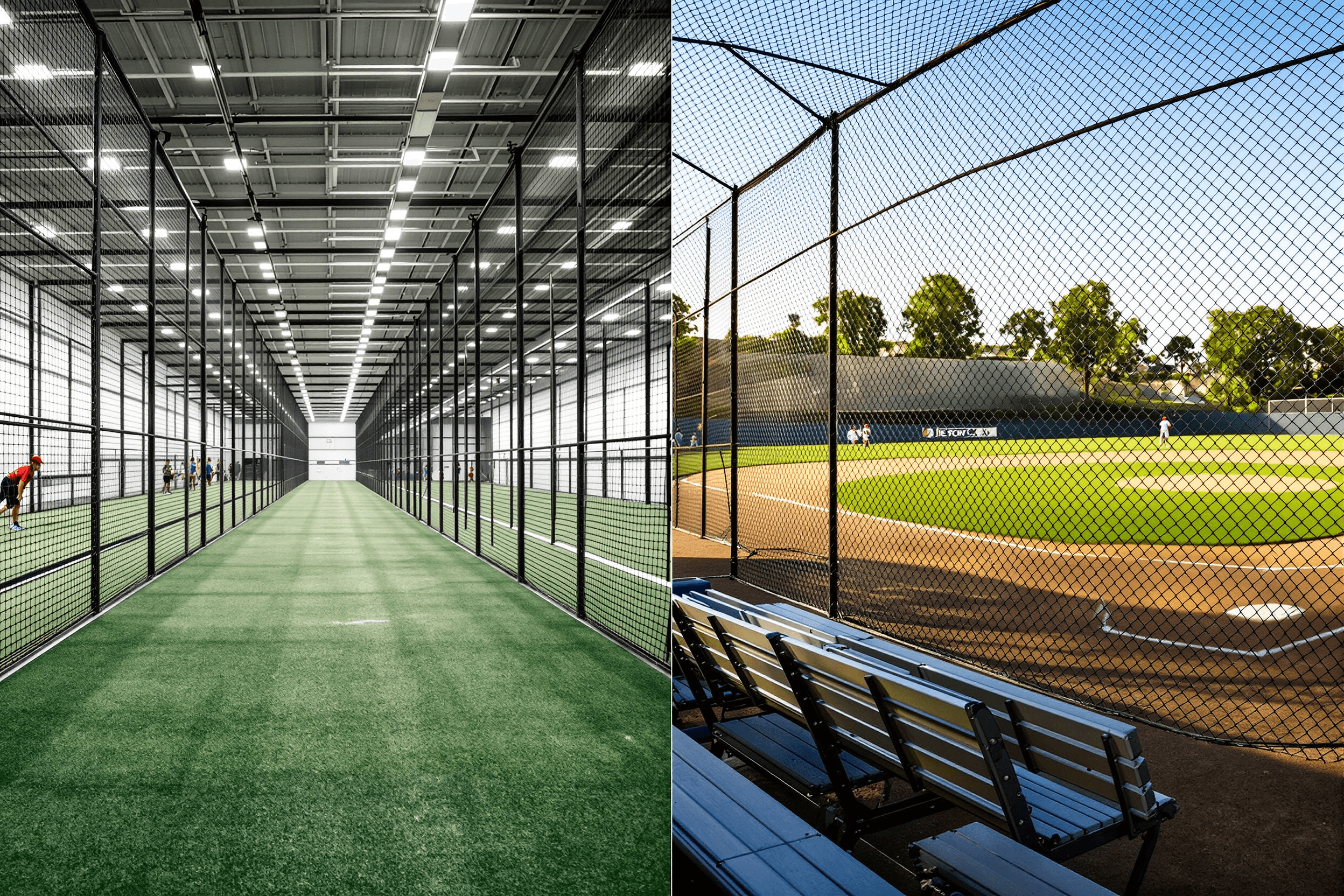
D-BAT's pricing is not arbitrary. The Temecula location operates a 25,400-square-foot indoor facility with 16 cages that use real balls, not the dimpled pitching-machine pellets you get at most cage rentals, and runs year-round programming under general manager Matt Hinds. The parent franchise was founded in 1998 and now runs academies in nine California cities from Bakersfield to Orange County. That national footprint comes with a curriculum, an instructor pipeline, and a price floor.
For a kid who's serious, 10 and up, playing on a travel team, trying out for high school, or wanting to pitch competitively, the math on D-BAT's 50-plus camps and clinics a year actually works. Specialty clinics that drill one thing (catching, hitting off velocity, infield footwork) are exactly the kind of focused reps a developing player needs and exactly what a rec league can't deliver. If your kid is asking for extra hitting on weekends, a D-BAT membership and a punch card of cage time is the right investment.
For a 7-year-old's first summer of baseball, it's overkill. Indoor cages with real balls and pitching machines set to game speeds are designed for players who already have a swing to refine. A beginner needs to learn how to put on a helmet, where to stand in the box, and how to throw to the right base, none of which requires a climate-controlled facility. When D-BAT opened in 2021, Hinds described the facility's goal as "giving the community something extracurricular to do, especially for the young softball and baseball players." That's an accurate description of D-BAT's role. It's not a description of where a first-time camper belongs.
Strike Zone and the Coach Mo Factor
Calling Strike Zone the budget option misreads what it is. It's the local option, and the bench behind it is more credentialed than the price suggests. Coach Mo, Mike Moheit, has been running the camps for more than 20 years, and the résumé he brings to a $125 session is the kind of thing parents pay a premium for elsewhere. He was head coach at Linfield Christian, assisted at both Vista Murrieta and Murrieta Valley high schools, and coached the Temecula Longhorns travel club. That's a full lap through every level of valley baseball a kid would conceivably play in.
The most interesting line on the Strike Zone staff page is a quieter one: assistant Coach Keller previously served as operations manager at D-BAT Temecula before coming over. That's not a knock on D-BAT, it's a data point that the instructional pedigree at the cheaper camp isn't a step down. The same coaching brain that helped run the $300 facility is now teaching at the $125 one.
The format reinforces what the camp is for. Strike Zone isn't trying to be a year-round development pipeline; it offers short, coach-led instruction when sessions are on the calendar. For most 7-to-10-year-olds in this valley, fundamentals are the product parents are shopping for. Check the live status before treating a lower advertised price as money saved.
The League Track: TYB, i9, and Why the City Doesn't Run a Camp
If your kid wants to play games, not take reps, you don't need a camp at all. Temecula Youth Baseball has been the PONY-affiliated nonprofit league since it incorporated in 1993, sets its own rules, and scales diamond size by age division, meaning a 7-year-old plays on a field built for 7-year-olds. That's a more developmentally honest experience than indoor cage work for kids that young.
i9 Sports runs three baseball seasons a year out of Vista Murrieta, January, March, and September on the 2026 calendar, which is the rolling alternative for families who want shorter commitments than TYB's spring-and-fall structure. Between the two, a Temecula or Murrieta kid can be in a uniform basically year-round without ever stepping into a paid camp.
What's missing from that list is the city. The Temecula Community Services Department runs the parks, the fields, the Class Hotline at (951) 694-6480, and a full slate of summer camps. But the TCSD summer camp roster covers basketball, flag football, junior multisport, pickleball, First Tee golf, soccer, and Temecula Glitz cheer, and skips baseball entirely. TCSD's youth sports page lists the nonprofits and tells families to contact each league directly. Translation: the city has decided TYB and the private camps own this lane, and it's not going to compete with them. If you're waiting for the City of Temecula to run a $75 rec-priced baseball week, you'll be waiting a while. The other youth sports options around town follow the same pattern.
Where They Actually Play: Birdsall, Sommers Bend, and the Field Access Reality
The whole ecosystem runs on two pieces of municipal real estate. Patricia H. Birdsall Sports Park at 32380 Deer Hollow Way is a 44-acre city complex with four lighted natural-grass baseball/softball fields, four lighted synthetic-turf soccer fields, and roughly 460 parking spaces. The diamonds run base paths up to 80 feet with outfield fences around 310 feet, which accommodates teams up to 13U. That's where the bulk of TYB's regular-season games happen.
The Sports Ranch at Sommers Bend handles the upper end. Its two natural-grass baseball fields run 90-foot base paths with outfield distances of 295 and 325 feet, adult dimensions, which is why the city routes tournament play there. Between Birdsall and Sommers Bend, the valley has the infrastructure to host weekend tournaments without the kids in your TYB division losing their regular field.
The catch is access. TCSD city fields are open to the public first-come, first-served on weekdays from 7 a.m. to 4 p.m. and all day Sunday, afternoons, evenings, and Saturdays belong to youth leagues and paid rentals. Translation: if you want to take your kid to hit grounders at Birdsall on a Saturday afternoon, you can't. That window belongs to TYB. The joint-use agreement TCSD maintains with Temecula Valley Unified School District unlocks additional school-site fields and is the main reason the leagues function at the volume they do, there isn't enough city land alone to hold every TYB and i9 game in a given week. The full picture of city parks and sports fields in Temecula shows how thin the margins are.
Locals' Take: If you're the parent of a kid playing fall TYB at Birdsall, start with league registration and a confirmed fundamentals session. D-BAT earns its price tag once your kid needs repeat, specialized reps. A cheaper camp that is canceled is not the cheaper option, so verify the date before building the summer plan around it.
Frequently Asked Questions
- How much does D-BAT Temecula's summer camp cost compared to Strike Zone at Vista Murrieta?
- At publication, D-BAT listed week-long camps around $300 and Strike Zone listed seasonal sessions at $125. Strike Zone later marked its June 13, 2026 hitting camp canceled, so verify a live session before comparing prices.
- Is D-BAT or Strike Zone better for a 7-year-old beginner?
- A recreational league or fundamentals camp is usually the better fit for a first-summer 7-year-old. D-BAT's indoor academy is built for repeat training; use Strike Zone only when its current calendar shows a confirmed age-appropriate session.
- Does the City of Temecula run a youth baseball camp?
- No. The Temecula Community Services Department runs summer camps in basketball, flag football, pickleball, golf, multisport, and cheer, but does not operate a dedicated youth baseball camp. TCSD lists Temecula Youth Baseball and other nonprofits and directs families to register with them directly.
- Where do Temecula kids actually play baseball games?
- Most league games happen at Patricia H. Birdsall Sports Park, a 44-acre city complex with four lighted baseball fields at 32380 Deer Hollow Way. The Sports Ranch at Sommers Bend handles tournament play with two natural-grass fields, and TCSD's joint-use agreement with TVUSD opens up school-site fields.
- Who is Coach Mo at Strike Zone?
- Mike 'Coach Mo' Moheit has run Strike Zone Baseball Camps for more than 20 years. He was head coach at Linfield Christian, an assistant at Vista Murrieta and Murrieta Valley high schools, and has coached the Temecula Longhorns travel club. His assistant Coach Keller previously ran operations at D-BAT Temecula.
Sources
- D-BAT Temecula, Camps & Clinics
- Strike Zone Baseball Camps
- Strike Zone Registration Portal
- Temecula Youth Baseball (TYB)
- City of Temecula, Patricia H. Birdsall Sports Park
- City of Temecula, Community Services
- City of Temecula, Tournaments & Field Specs
- City of Temecula, Field Reservations
- City of Temecula, Youth Sports
- i9 Sports, Vista Murrieta Baseball
- MaxPreps, Vista Murrieta Baseball
- Valley News, D-BAT Temecula coverage
- TCSD Summer Camps Roster (Radio 94.5)