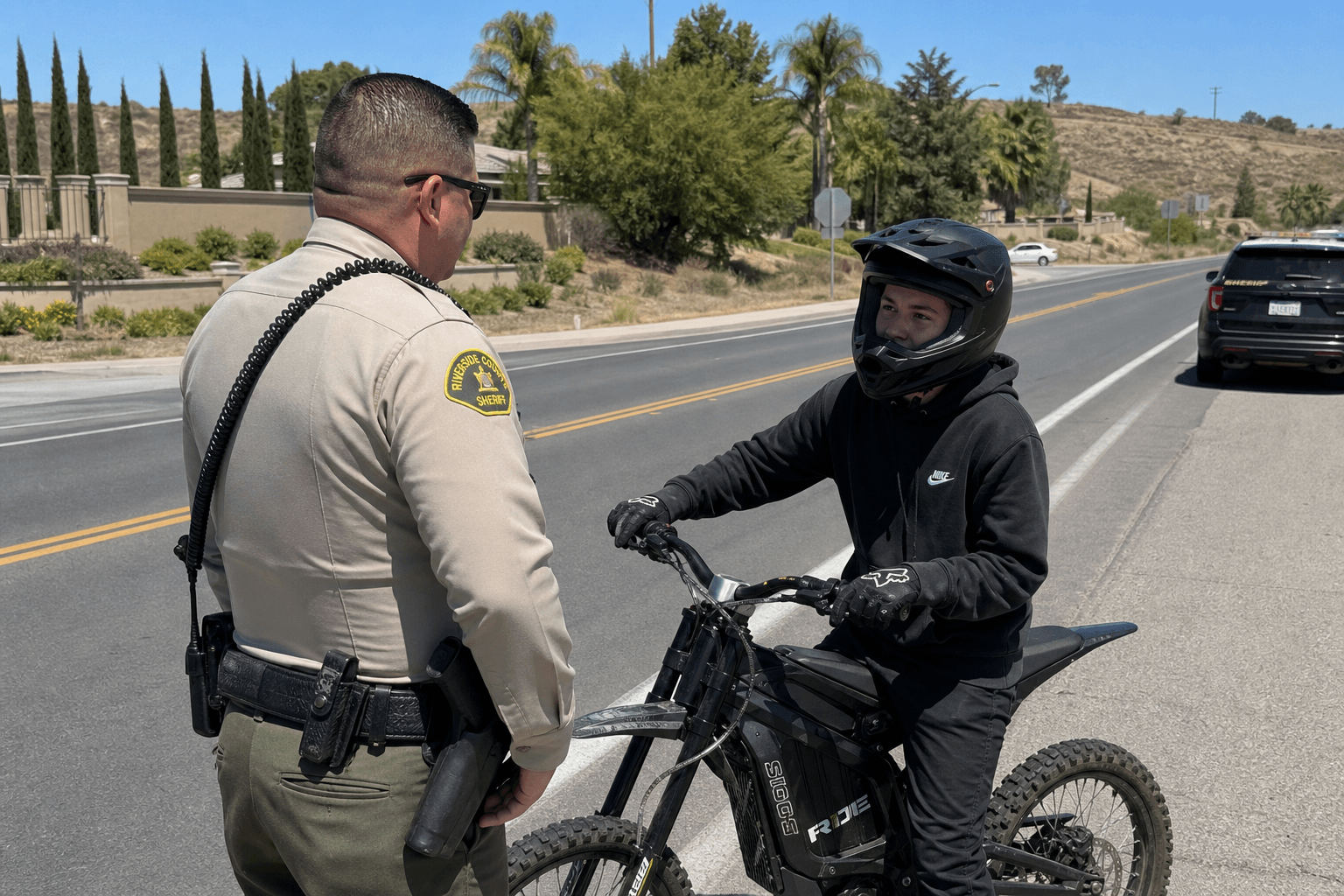
On June 20, 2026, the Riverside County Sheriff's Southwest Station posted that Deputy Alvarez cited a parent under California Vehicle Code 14607 after an e-moto enforcement stop, a Temecula community safety reminder that a parent can be cited for allowing an unlicensed minor to operate a motorized vehicle. The charge was allowing an unlicensed driver to operate a vehicle. The Riverside County District Attorney has separately warned that reckless parent-enabled riding can raise child-endangerment exposure.
Southwest Station Citation Details
The Southwest Station said the contact came during ongoing e-moto enforcement and that the parent was "educated on California licensing requirements related to operating e-motos and similar motorized vehicles" per the station's Instagram post. The station has warned elsewhere that an "e-bike" without pedals and with more than a 750-watt motor is legally an electric motorcycle that cannot be legally operated by unlicensed youth on public thoroughfares, according to the sheriff's e-motorcycle advisory.
The DA's warning goes beyond a traffic ticket. The Riverside County DA's office stated that under California Penal Code 273a(a), a parent can be held criminally liable for child endangerment for providing a minor an inappropriate e-bike or failing to ensure safe operation and required safety equipment, with a felony conviction carrying a maximum of six years in state prison, as reported by Uken Report. Assistant District Attorney Mike Cabral said the office's greatest concern is that a child could cause serious injury or death to themselves or others through reckless riding.
California Legal Definition of E-Bikes vs. Motorcycles
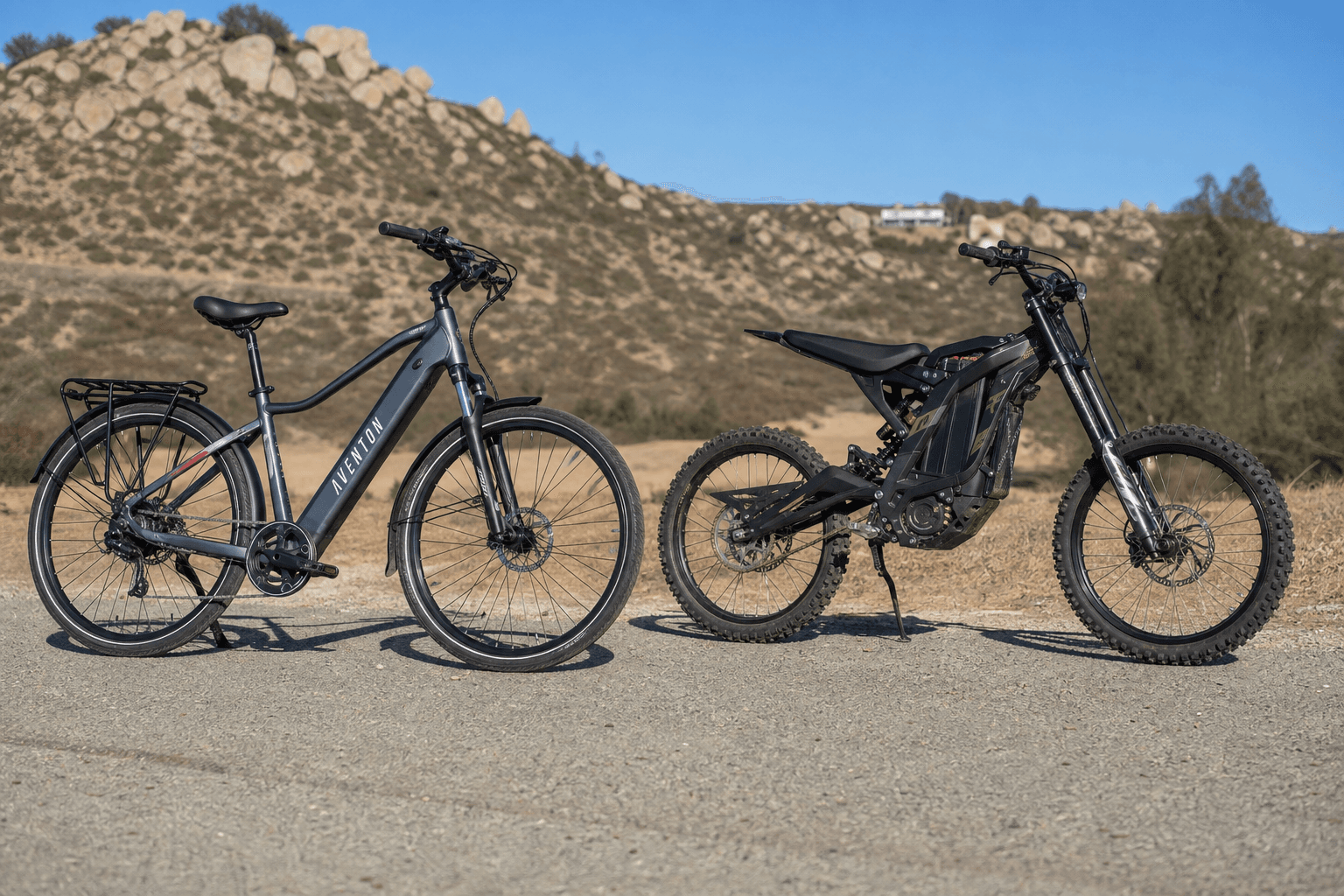
California defines an electric bicycle as a bicycle with fully operable pedals and an electric motor of less than 750 watts, organized into three classes, with Class 3 limited to riders 16 and older. Devices without operable pedals or with motors over 750 watts do not fit California's e-bike definition and may fall under motorcycle or motor-driven-cycle rules. The practical rule for parents is simpler: if it has no operable pedals or exceeds California's 750-watt e-bike limit, do not assume it is a legal youth e-bike.
New provisions in Assembly Bill 875 allow law enforcement to impound an e-bike for at least 48 hours if it does not meet the three-class definition or has been illegally modified, per the California Highway Patrol. The same enforcement reached Murrieta this month: on June 5, 2026, the Murrieta Police Department issued 25 citations and impounded 7 e-bikes at Cole Canyon Park during an operation targeting a planned "ride out." Parents weighing what their kids ride can check Temecula's 2026 e-bike rules for parents and riders.
Frequently Asked Questions
- Can a parent be cited if their child rides an e-moto without a license?
- Yes. On June 20, 2026, the Riverside County Sheriff's Southwest Station cited a parent under California Vehicle Code 14607 for allowing an unlicensed driver to operate a vehicle after an e-moto stop in the Temecula area.
- Is a Sur-Ron legally an e-bike in California?
- California e-bikes must have operable pedals and a motor under 750 watts. Common Sur-Ron-style e-motos that fall outside that definition may require licensing and registration.
Sources
- Riverside County Sheriff Southwest Station (Instagram)
- Sierra Sun Times, Riverside County Sheriff e-motorcycle advisory
- Uken Report, DA Warns Parents of Liability for Reckless E-bike Use
- California Bicycle Coalition, E-Bike Classifications
- California Highway Patrol, New 2026 Laws
- CBS Los Angeles, Murrieta e-bike enforcement at Cole Canyon Park